
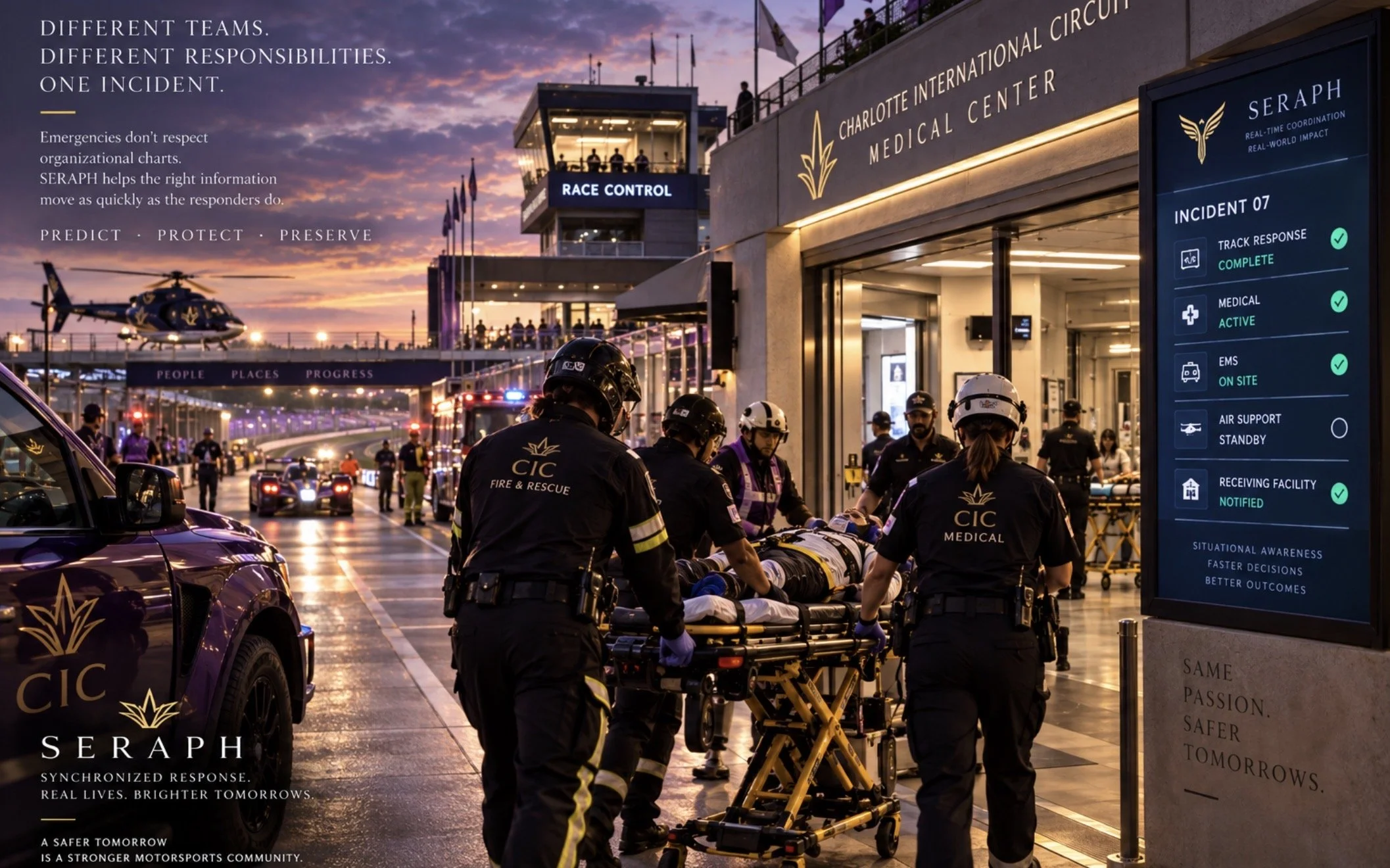
Cross-Agency Coordination
Emergencies don’t respect organizational charts. When something goes wrong, the response rarely belongs to one team. Every group from race control to onsite emergency responders to the receiving hospital has a different part of the same job - creating the best possible outcome for the patient. Unfortunately, they all may also be working from a slightly different perspective of the same incident.
Which creates one of the questions at the heart of SERAPH: How do we help the right information move as quickly as the responders do?
Excellent emergency response isn’t simply about individual capability - it’s also about coordination. Who knows what happened? Who has been dispatched and who is already there? What resources are moving and where do they need to go? Has the situation changed? What does the next team need to know before the handoff reaches them?
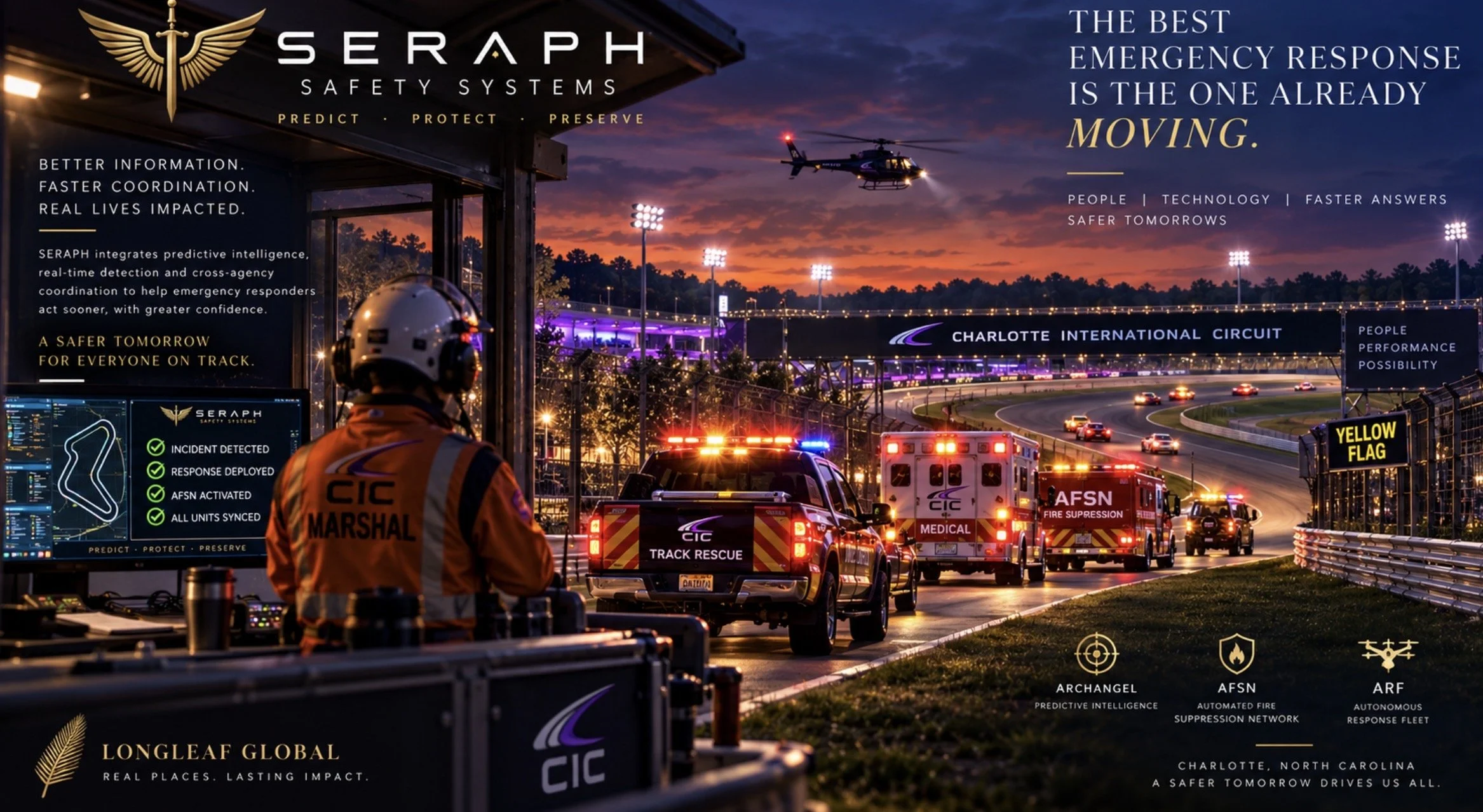
Seconds Matter
In an emergency, a few seconds matter and a few minutes can be an eternity.
Last week, we talked about shared situational awareness: making sure the people responsible for an emergency aren’t spending its first critical moments trying to assemble the same picture. What we didn’t touch on is that the information only matters if it helps someone act.
That’s the next question behind SERAPH: How much time can we give back to the people responding?
At a motorsports facility, an incident can trigger an extraordinary chain of human decisions. Race control recognizes what’s happening, marshals and emergency equipment respond, medical teams deploy, and even outside emergency services may need to be involved.
Each step takes time and, traditionally, some of that time is spent waiting for information to travel from one person or system to another. Our goal isn’t to automate judgment out of that process; SERAPH is being designed to help put better information into the hands of race control, marshals, firefighters, paramedics, and physicians sooner, so they can make the next good decision faster.
The objective isn’t technology for technology’s sake - it’s reducing the distance between “something happened” and “help is on the way”.
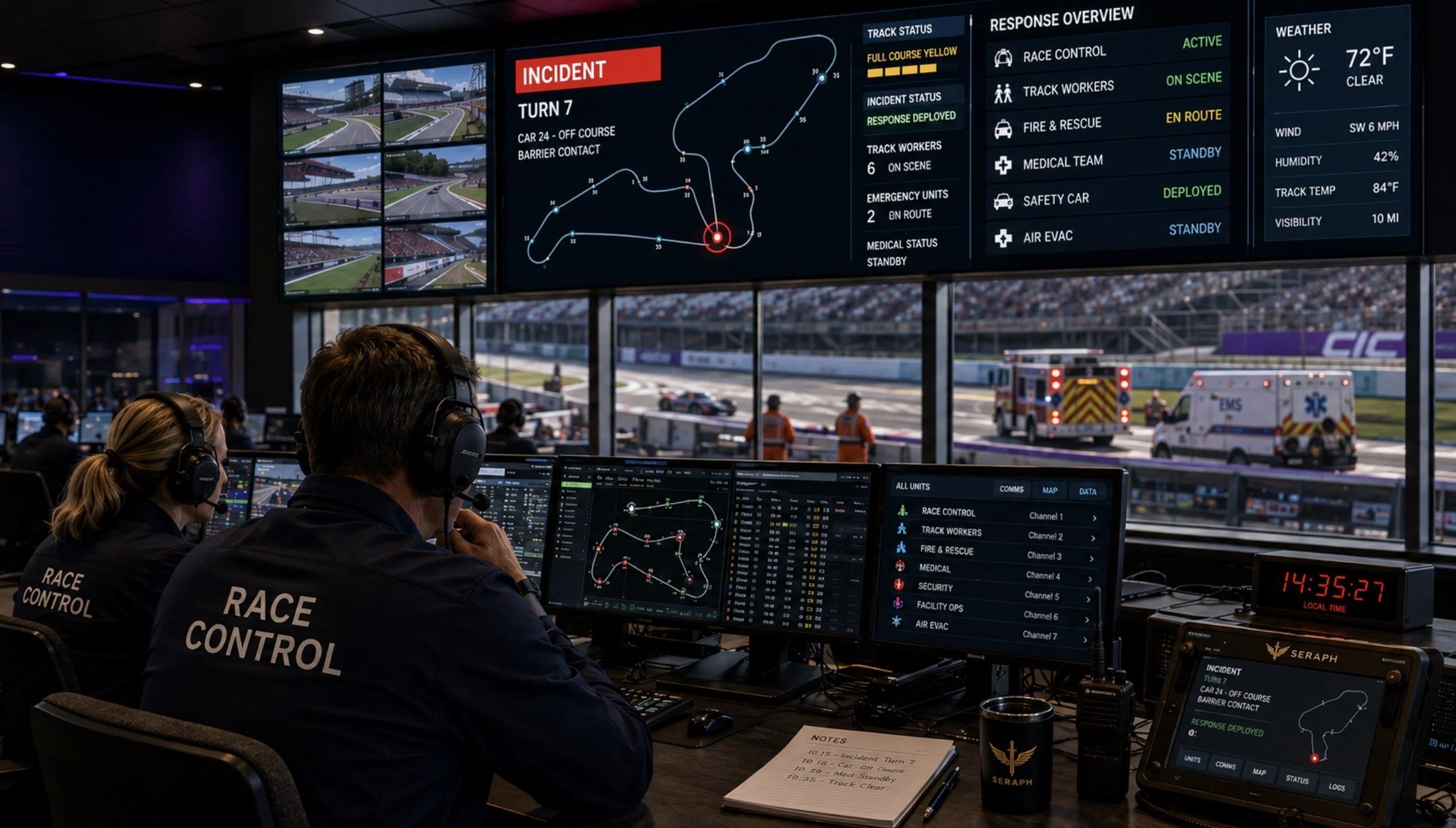
Right Info, Time, & People
The first few minutes of an emergency shouldn’t begin with figuring out what’s happening.
At a motorsports facility, responding to a serious incident can involve far more people than the crew arriving at the scene - everything from race control and marshals to potentially outside fire, EMS, or medevac resources.
Although each one has a different responsibility, an effective response depends on all of them understanding the same problem and coordinating seamlessly.
That’s harder than it sounds when information arrives from different places, at different times, to different people. Conditions can change rapidly and what one team knows may not yet have reached another, and while everyone works to assemble the picture, the clock keeps ticking.
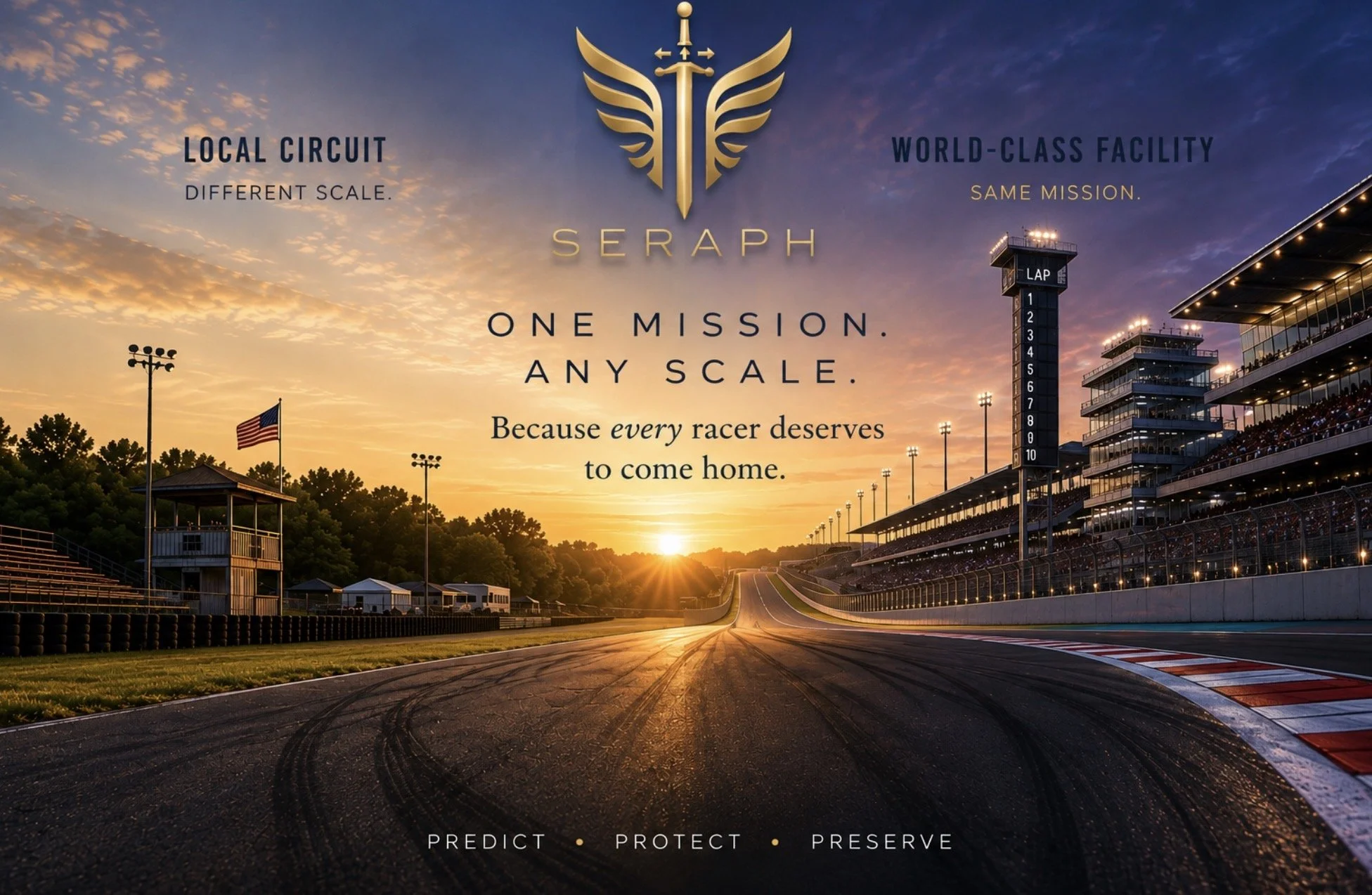
Scaling SERAPH
Safety technology shouldn’t only work for the facilities that can afford everything. That has been on my mind quite a bit as we begin thinking through what the first SERAPH prototype needs to prove.
Motorsports facilities exist on an enormous spectrum. At one end are smaller local circuits operating with comparatively simple infrastructure and limited technology. At the other are world-class venues capable of supporting extraordinarily sophisticated timing, communications, vehicle data, race control, and safety systems.
I don’t believe we should design only for the latter.
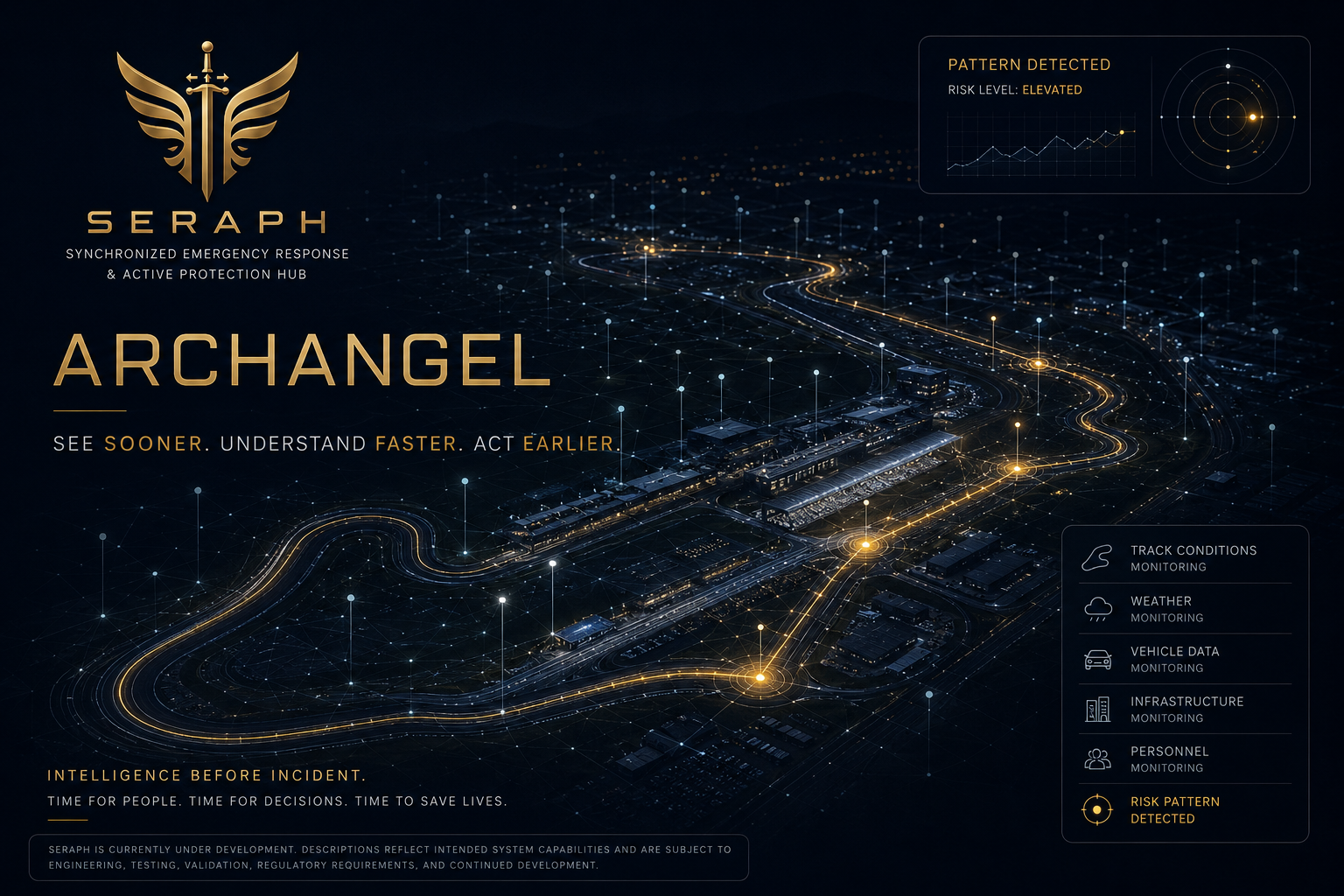
Archangel: Predictive Intelligence
The best kind of emergency is the one you see coming.
Of course, that isn’t always possible: accidents happen, equipment fails, conditions change, people make mistakes…
No technology can completely eliminate risk, and any safety system claiming otherwise probably deserves a healthy dose of skepticism. But what if we could recognize more of the warning signs sooner?
That question became the foundation for Archangel, the predictive intelligence component of SERAPH.
Most emergency systems are necessarily reactive - something happens, someone recognizes it, information begins moving through the appropriate channels, a decision is made, and resources respond.
Every one of those steps takes time.
Archangel is being designed to shrink that initial timeline.
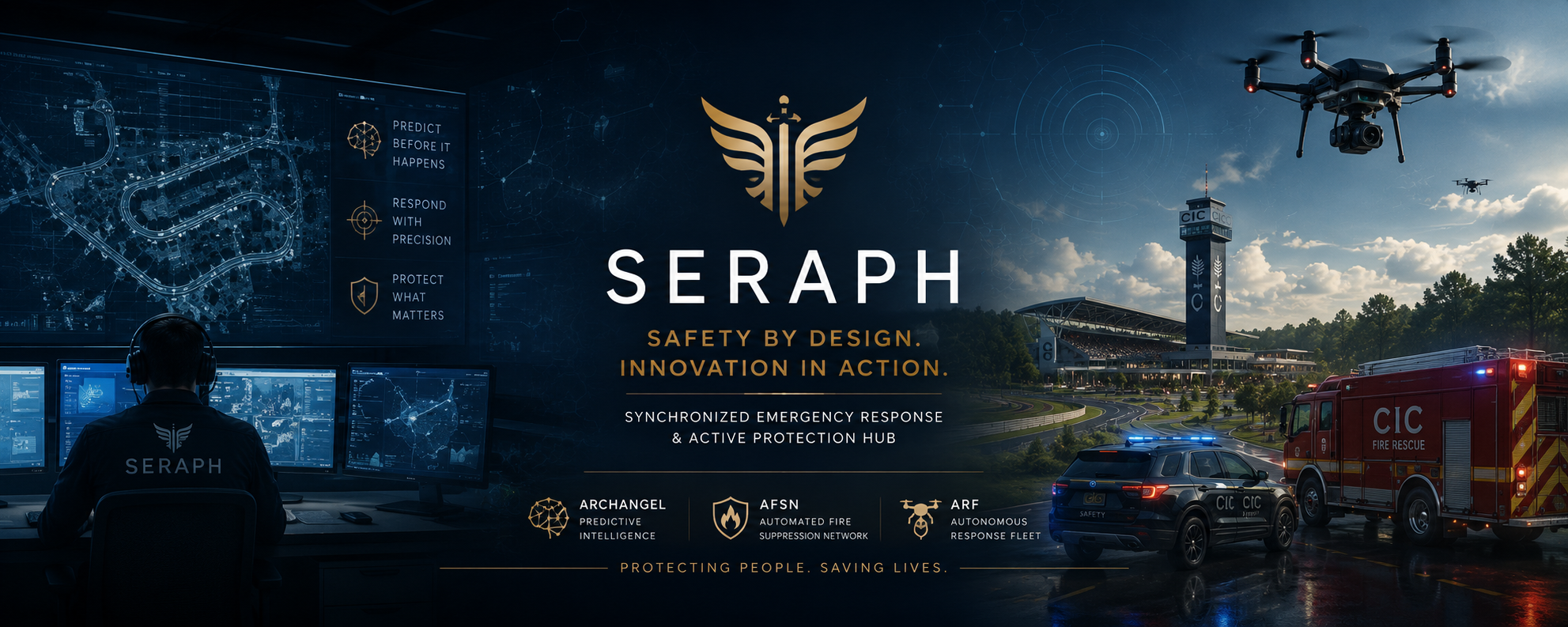
Intro to SERAPH
In an emergency, minutes matter and seconds can make the difference between success and disaster.
Yet in complex, high-risk environments, emergency response can still depend on a sequence of events:
- An incident occurs
- Someone recognizes it
- Details are communicated
- The situation is assessed
- Resources are identified and dispatched
- Multiple people, systems, and agencies begin coordinating a response
And so on, in order, more or less. With time gaps in between.
Every single one of those steps is necessary, but...
What if some of them didn't have to happen sequentially?