
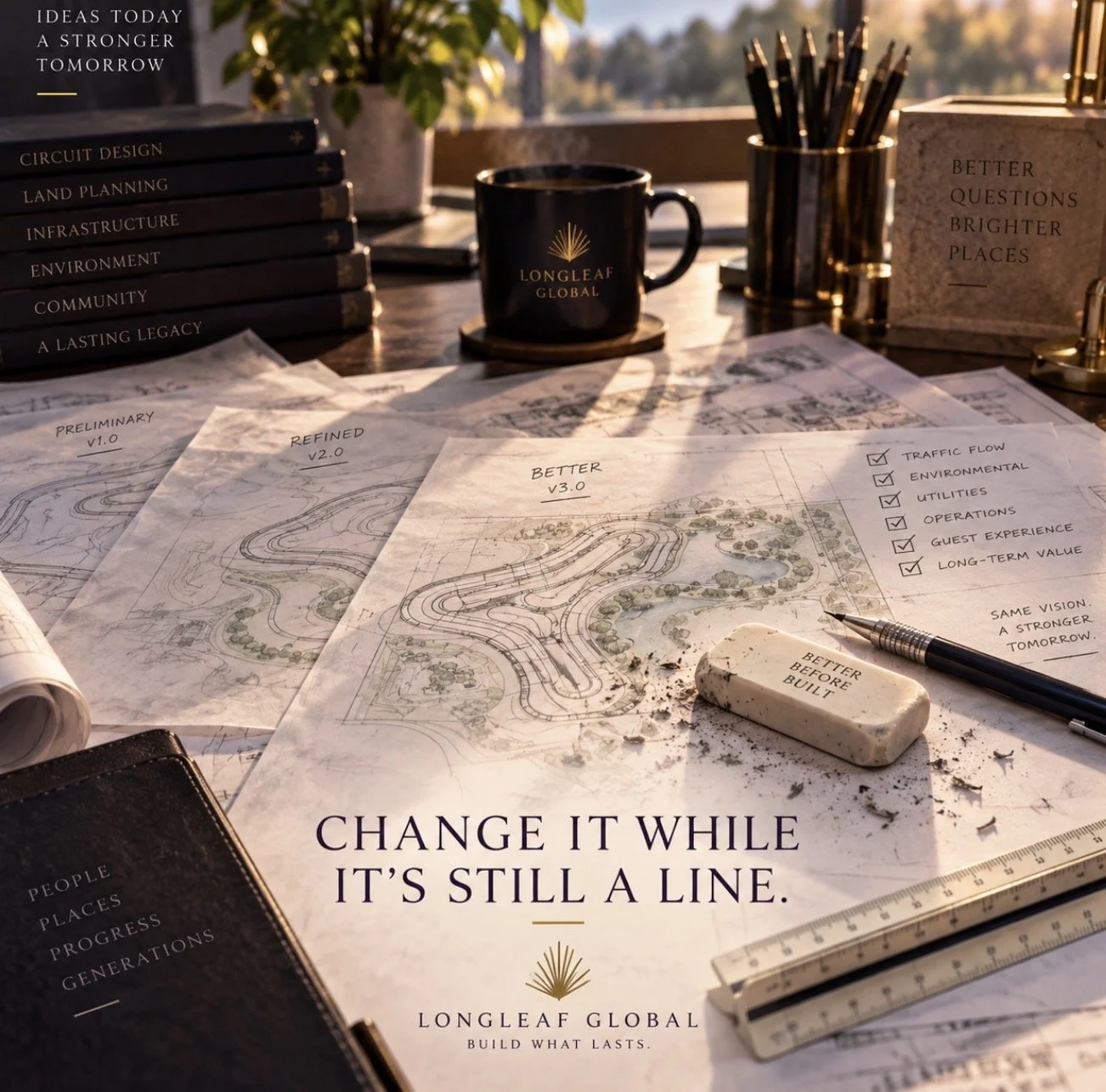
Change it While You Can
One of the cheapest things you can do on a multibillion-dollar development is change your mind - provided you do it early enough.
Early-stage development involves an enormous amount of work that will never appear in a rendering - studies, research, models, financial analysis, regulatory conversations, operational planning, environmental work, design iterations, endless meetings, and questions.
So many questions.
Miles and miles of questions.
Sometimes questions confirm the original idea, sometimes they improve it, and occasionally they tell you to throw part of it away and start again.
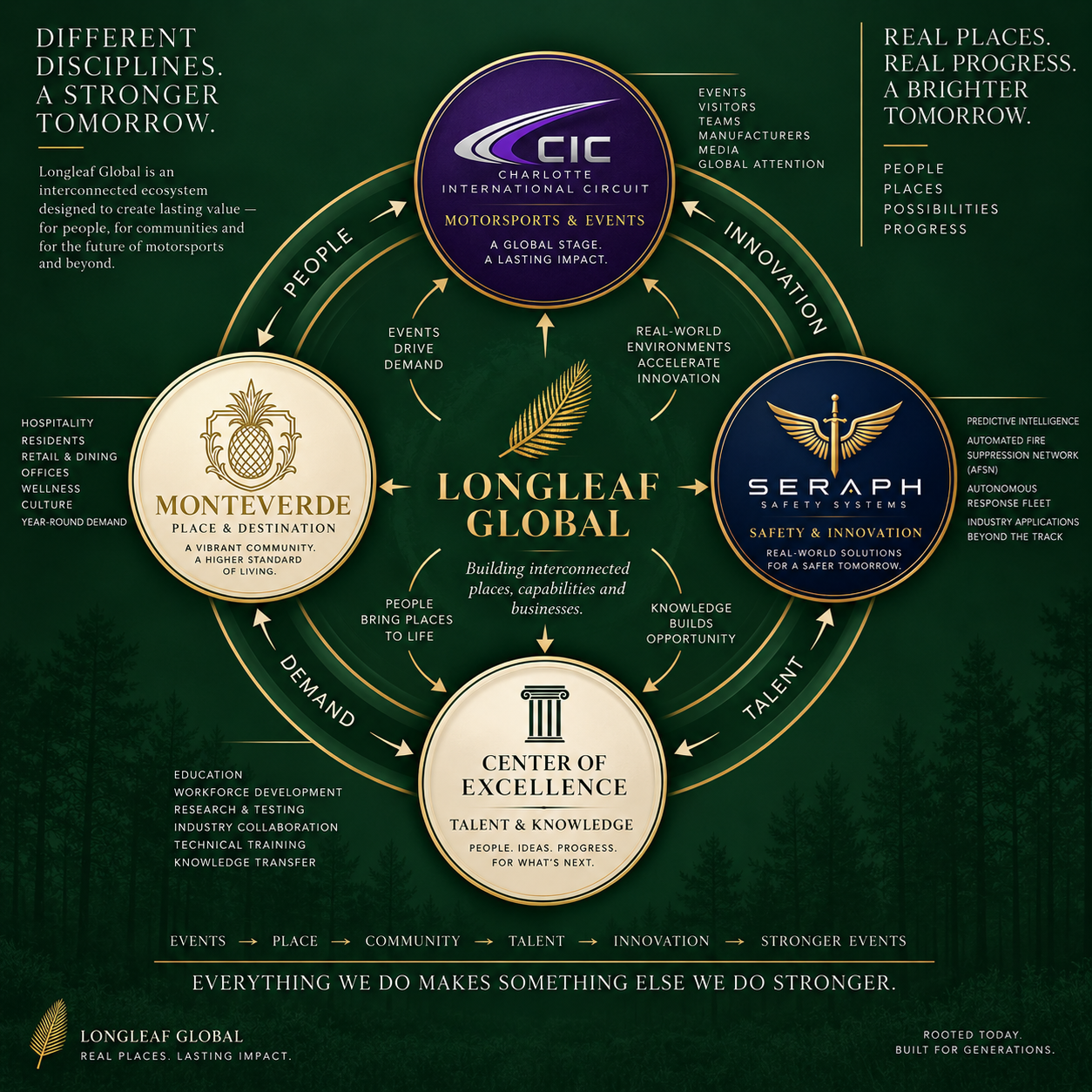
Parts of the Whole
“Why are you doing all of these different things?”
It’s a fair question, considering Longleaf Global is developing a world-class motorsports destination, a mixed-use community, and safety technology. We’re thinking about education, workforce development, research, and other capabilities that may eventually extend well beyond the boundaries of our first project.
From the outside, those can look like very different businesses, but from where I’m sitting, they’re all parts of the same system:
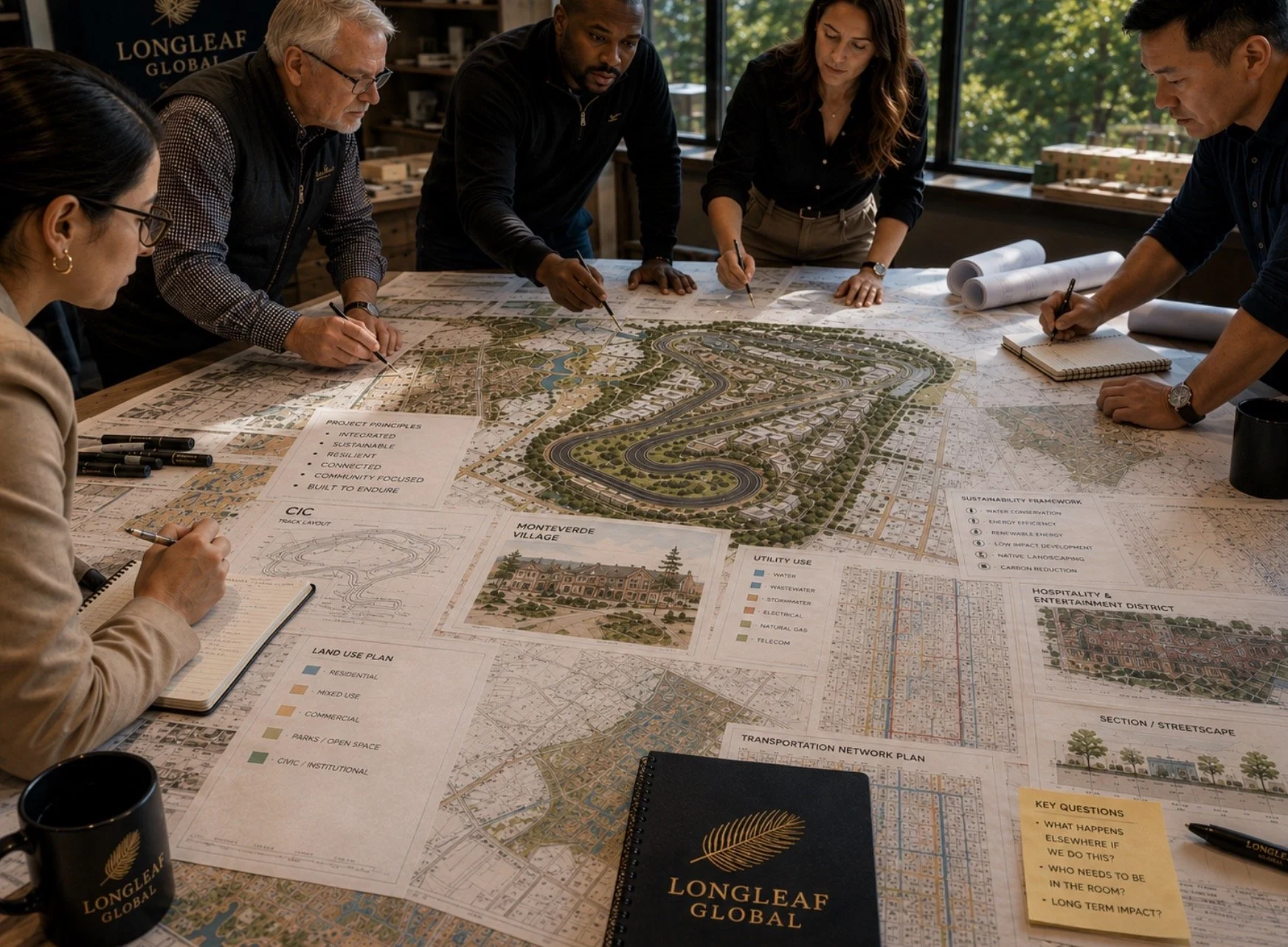
Playing Jenga Blindfolded
One of the easiest ways to make a bad decision on a complicated project is to solve the right problem in isolation. Across our inaugural project, we have racetrack designers, neighborhood and hotel designers, transportation and utility engineers solving for capacity, and many more incredible professionals applying their skills and experience to bring Charlotte International Circuit and Monteverde to life.
Every one of those solutions can be perfectly reasonable on its own; the problem is that none of them actually exists on its own, which is something I’ve become increasingly conscious of while developing Longleaf - move one piece and something else moves with it.
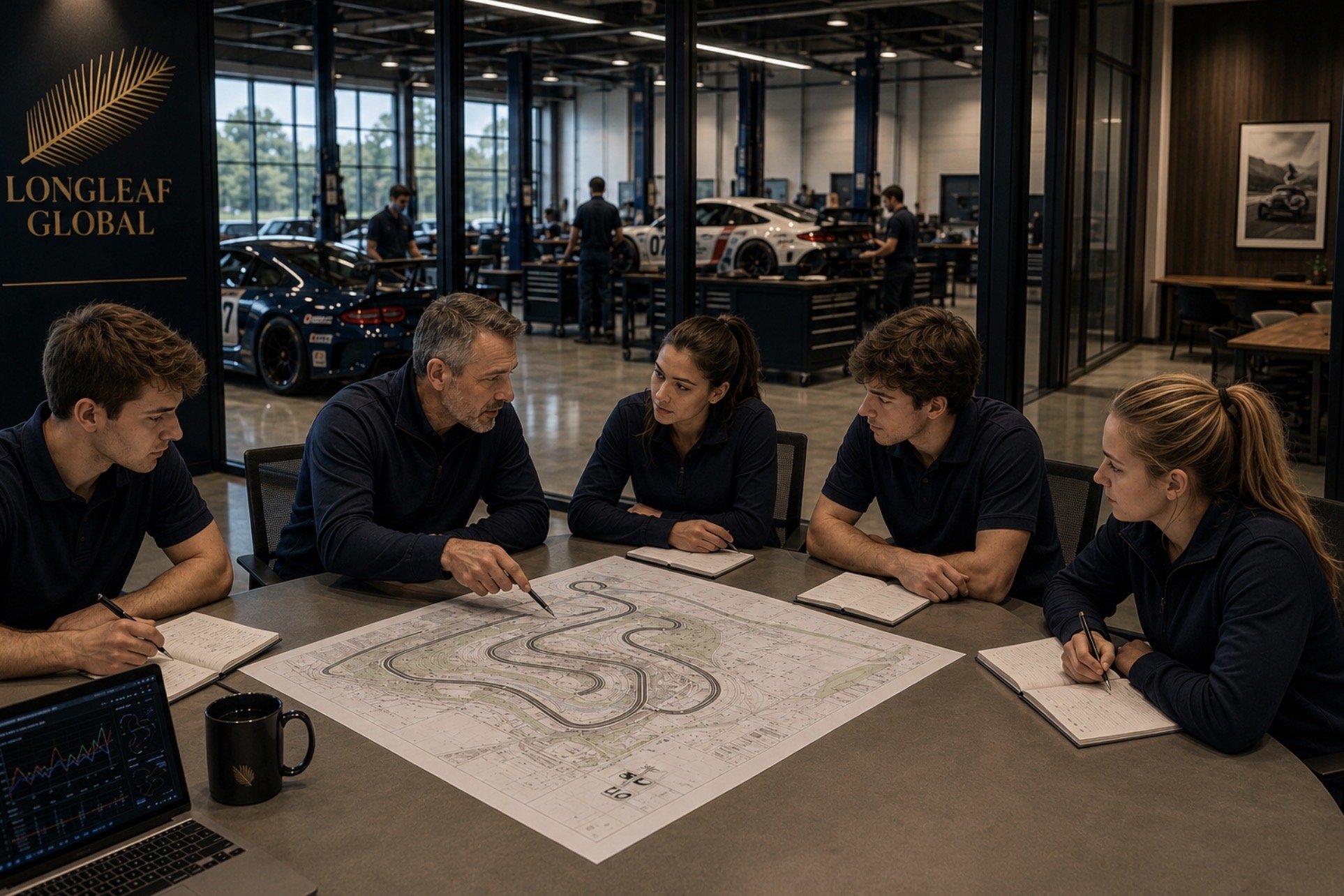
The Center of Excellence
When people think about a major motorsports facility, they naturally think about race weekends: cars, motorcycles, crowds, race teams, and the spectacle and pageantry.
One of the things I care most about building will matter just as much on an ordinary Tuesday morning - The Center of Excellence at Charlotte International Circuit.
The idea begins with a simple belief: A world-class motorsports destination shouldn’t only host races, it should help cultivate the sport and the industry. Motorsports is an extraordinary concentration of talent, but the pathways into it aren’t always obvious. A young driver may have talent that needs cultivated through instruction and seat time. A student may love racing without realizing that their aptitude for engineering, data, fabrication, logistics, communications, hospitality, or dozens of other disciplines could become a career within the sport. A working professional may have decades of knowledge that shouldn’t disappear when they retire.
Those aren’t separate opportunities - they’re parts of the same ecosystem.
Inspiration for Centuries
It’s easy to say you’re building for the long term. The harder question is: what does that actually change?
If you’re designing something to last for generations rather than simply survive until the next transaction, you start asking very different questions. Not just: What will this cost to build? But: What will it cost to own? How will it be maintained? Can it be repaired? Can it adapt as technology and the needs of its users change?
And one of my favorites: What is this going to look like in 50 years? 100 years?
From Problem to Purpose
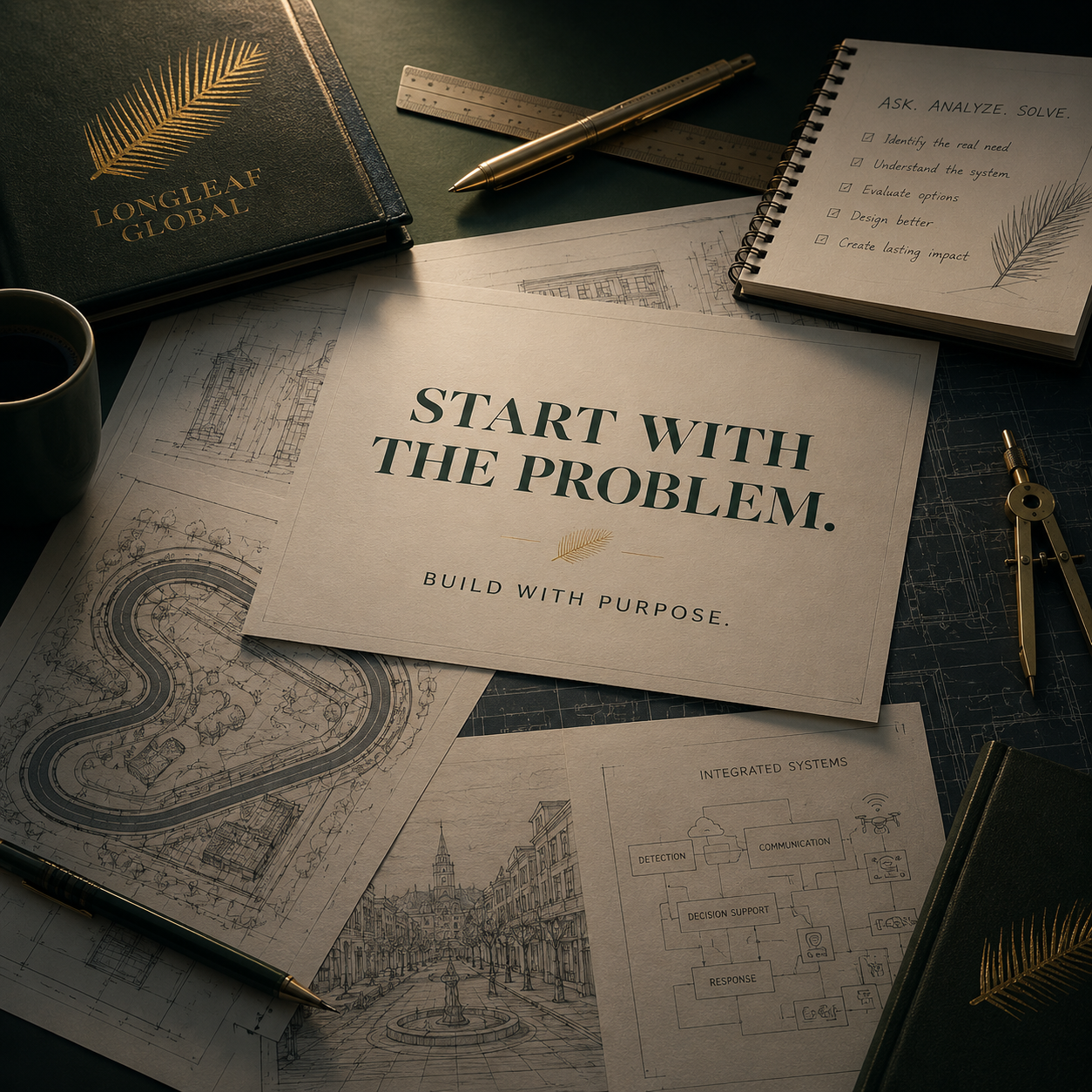
Start with the problem, and build with purpose.
Yesterday, Longleaf Global publicly introduced SERAPH, our patent-pending integrated emergency-response platform.
But SERAPH didn’t begin because I decided Longleaf needed a technology company. It definitely didn’t begin because I, as a solo entrepreneur with a foot in the corporate world, a gym habit, two teenagers, and a micro farm, decided I was bored and in need of something else to do.
It began with a problem.
Longleaf Global
So what are we really building?
When people ask about Longleaf Global, they usually ask about the projects: the racetrack, the village, and/or the technology.
But those are only part of the story.
The name of the company comes from the longleaf pine, a tree that once soared over millions of acres across the American South. Longleaf forests are remarkable ecosystems, but what has always resonated with me is the tree itself.